Oct 2023 - Nov 2025

Gaming / B2B SaaS / Event Management

Gamers.Online

Oct 2023 - Nov 2025

Role:

Marketing Strategist → Product Designer

Tools

Figma, Figma Make

Bringing order to gaming event organising

Gamers.Online

Oct 2023 - Nov 2025

Role:

Marketing Strategist → Product Designer

Client

Booking Corp.

Designing a B2B and B2C event platform through a full product MVP


Designing a B2B and B2C event platform through a full product MVP


Gaming / B2B SaaS / Event Management


Bringing order to
gaming event organising

Gamers.Online

Figma, Figma Make

Marketing Strategist → Product Designer

Bringing order to gaming event organising

Tools

Figma, Figma Make

Tools

Figma, Figma Make

The image featured at the top of the about us page #1
The image featured at the top of the about us page #2

Context

Context

I wasn't hired to design. I did it anyway.

I wasn't hired to design.
I did it anyway.

I wasn't hired to design. I did it anyway.

Gamers.Online started as a community platform — find players, organise matches, build your game library, earn XP. The pivot toward event management came from a clear gap: no purpose-built tool existed for gaming convention organisers. Tabletop.Events had the depth but a painful interface. Eventbrite was easy but entirely generic — no badges, no multi-track scheduling, nothing built for gaming. Everything was spreadsheets and Discord.

I joined as a Marketing Strategist. I left having designed the entire organiser creation flow from scratch, co-led the MVP strategy, and somewhere in between, built the case for why design needed a seat at the table.

The Work

Designing a six-section flow from scratch

Designing a six-section flow from scratch

The event creation flow covered everything an organiser needed to set up a convention: basic details, multi-track scheduling, ticketing, role management, communications, and payments. Six sections, designed end-to-end, within a fixed design system I had no authority to change.

That constraint was useful. With no room for visual problem-solving, every decision had to live or die on information hierarchy and flow logic. I am sharing a Figma Make file of how I would have done it

Settings

— the entry point. Event name, location, dates, capacity, description, logo, social links, terms. Required fields kept minimal and visually distinct from optional ones, with geo and dates prominently surfaced given their role in player discovery downstream.

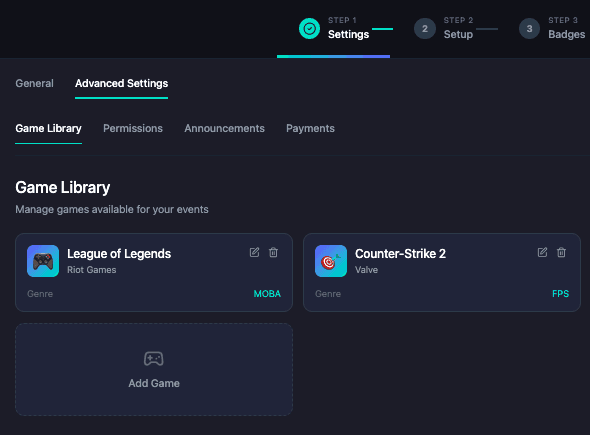
Setup

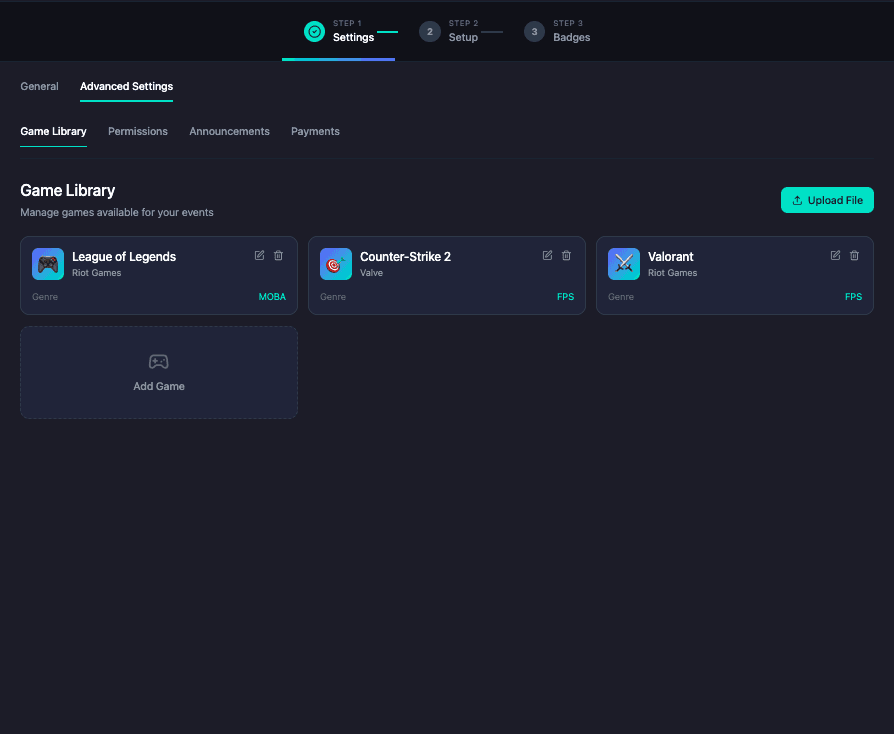
— the most complex section. Spaces, Tables, Game Library, Matches, and sub-events (workshops, seminars, tournaments). The Game Library integration let organisers pull directly from BoardGameGeek or the platform's own library — keeping the social layer useful rather than buried.

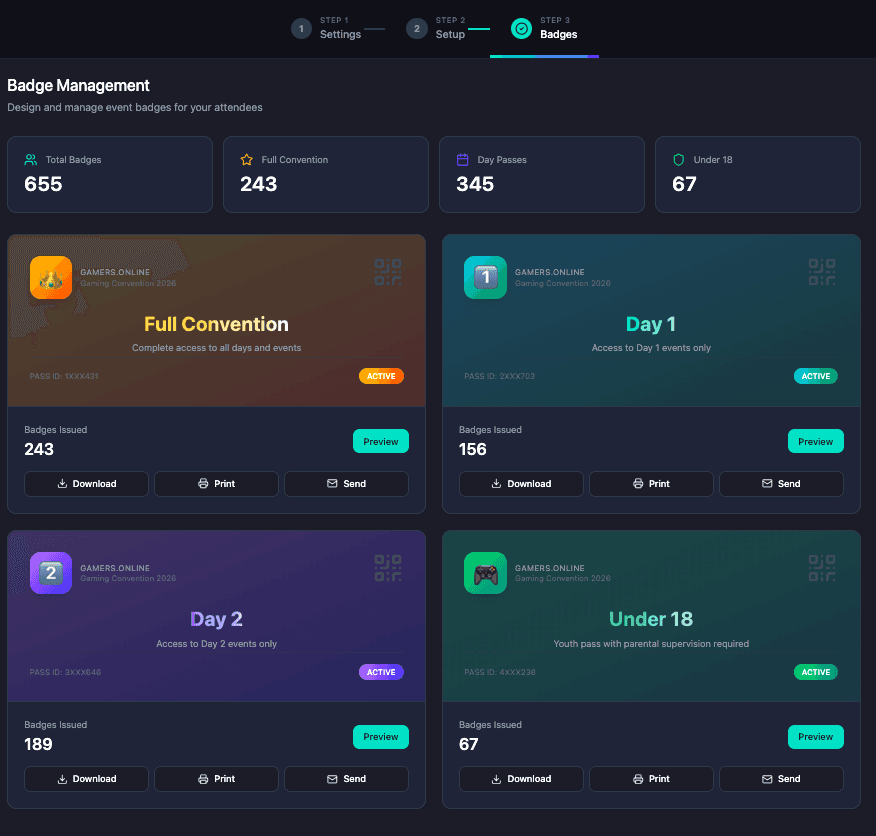
Badges

— ticketing with operational depth. Multiple pass types, individual pricing, availability limits, public/private visibility, and a live participant view showing sold, scanned, paid, and unpaid status. Not just a setup screen — an operational tool for the day of the event.

Permissions

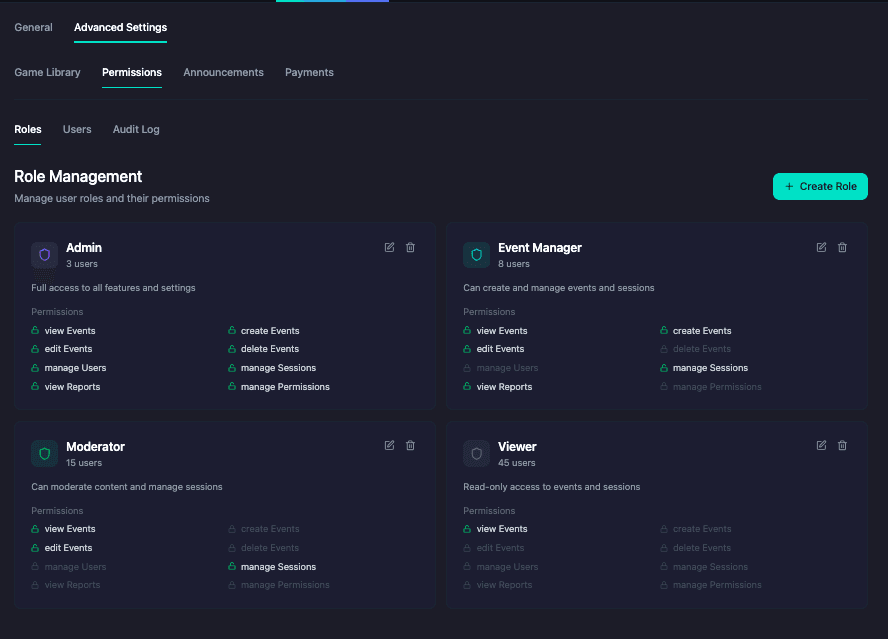
— granular role management for event staff across ten permission types, with automatic expiry at convention end. One detail that mattered: removing the overhead of manually revoking access after every event.

— granular role management for event staff across ten permission types, with automatic expiry at convention end. One detail that mattered: removing the overhead of manually revoking access after every event.

Announcements

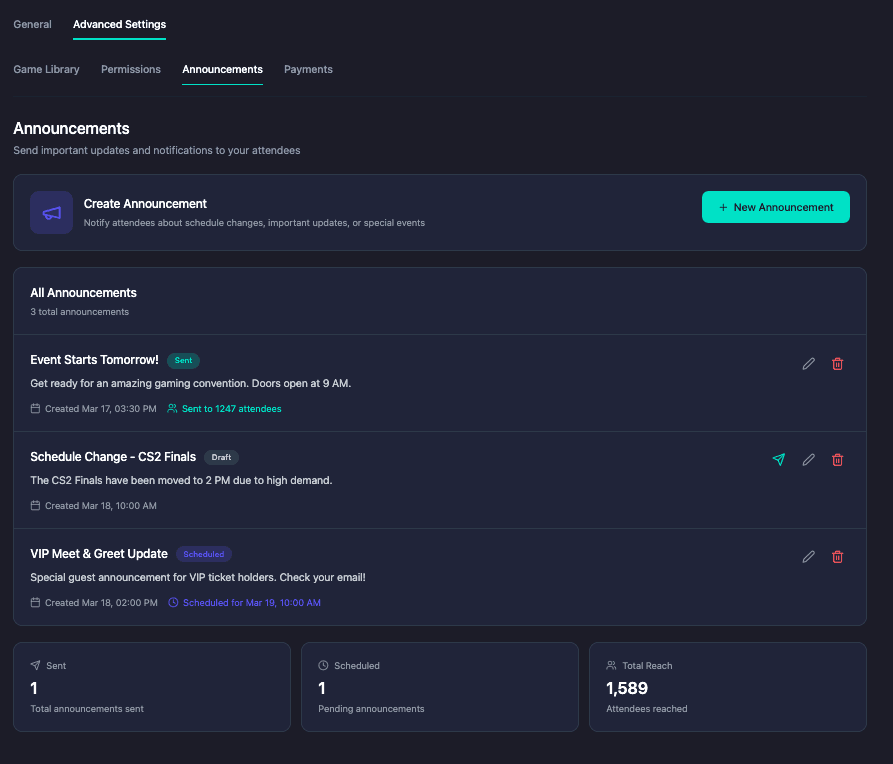
— a direct messaging tool stripped to its essentials. Subject, audience, message, send. Designed for an organiser in the middle of running an event, not composing carefully from a desk.

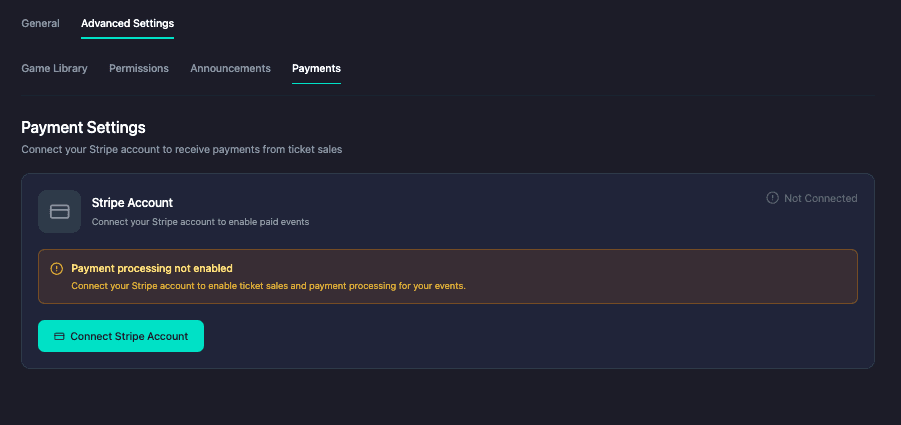
Payments

— the Stripe connection, placed deliberately last. Requiring financial setup as a gate to publishing kept early steps accessible while ensuring only committed organisers reached Publish — reducing incomplete test events cluttering the discovery feed.

** The screens below are my own design exploration — built on the flows I designed, with the visual direction I would have proposed. **
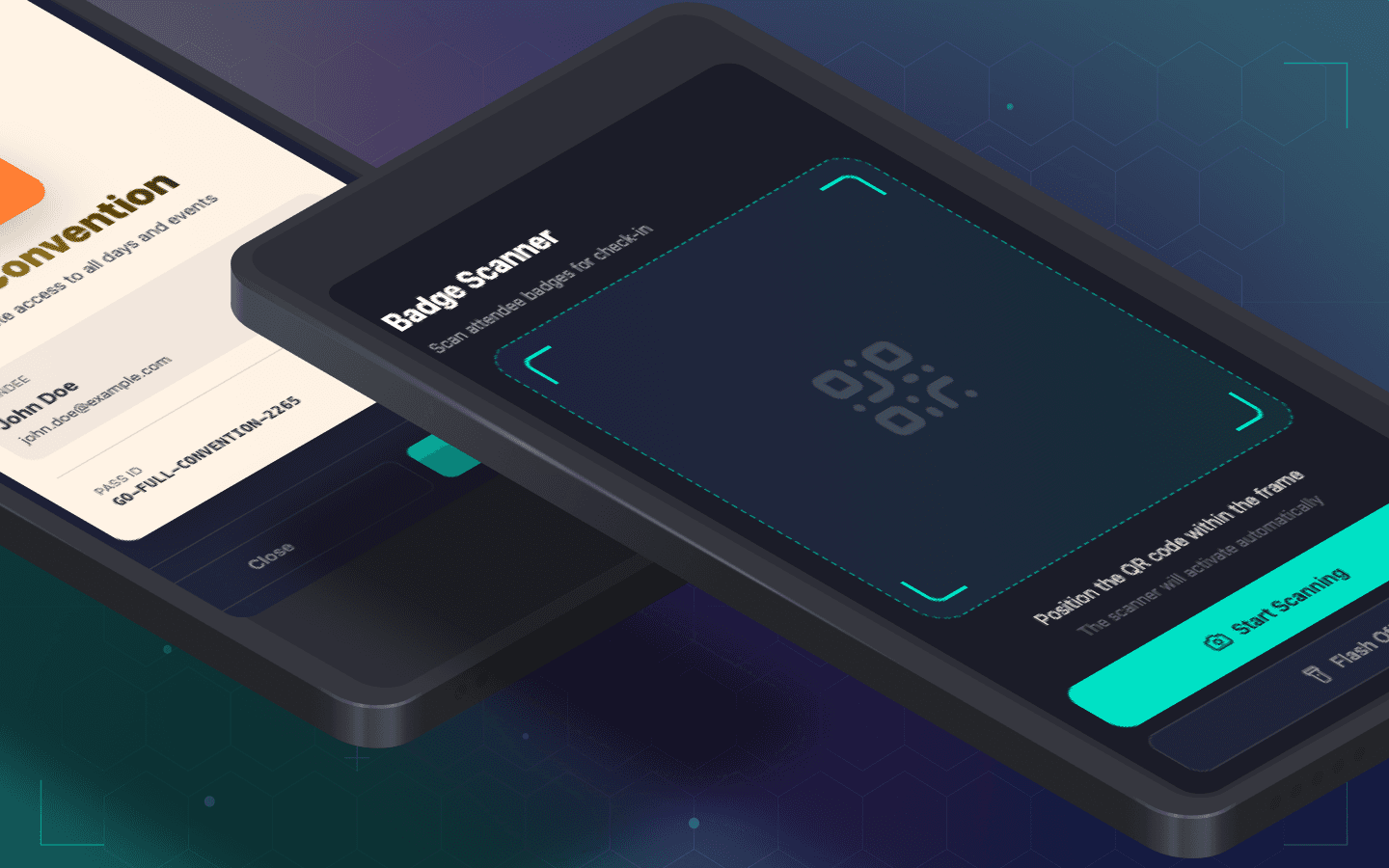
Design Exploration

What I would have done differently

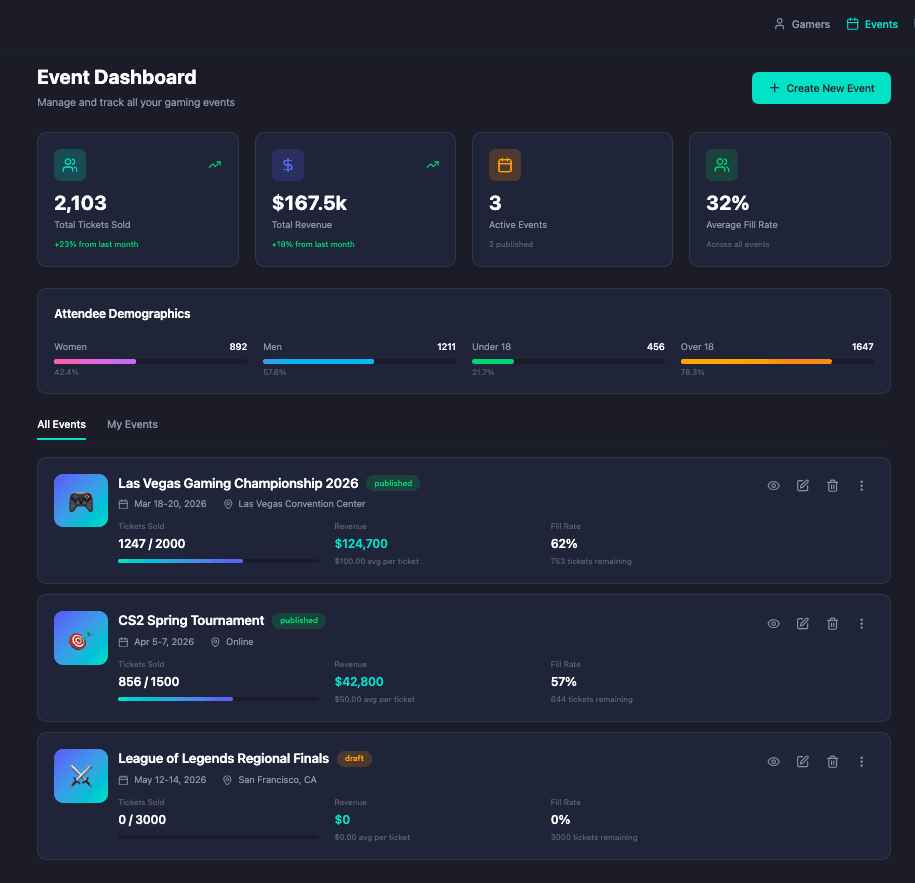
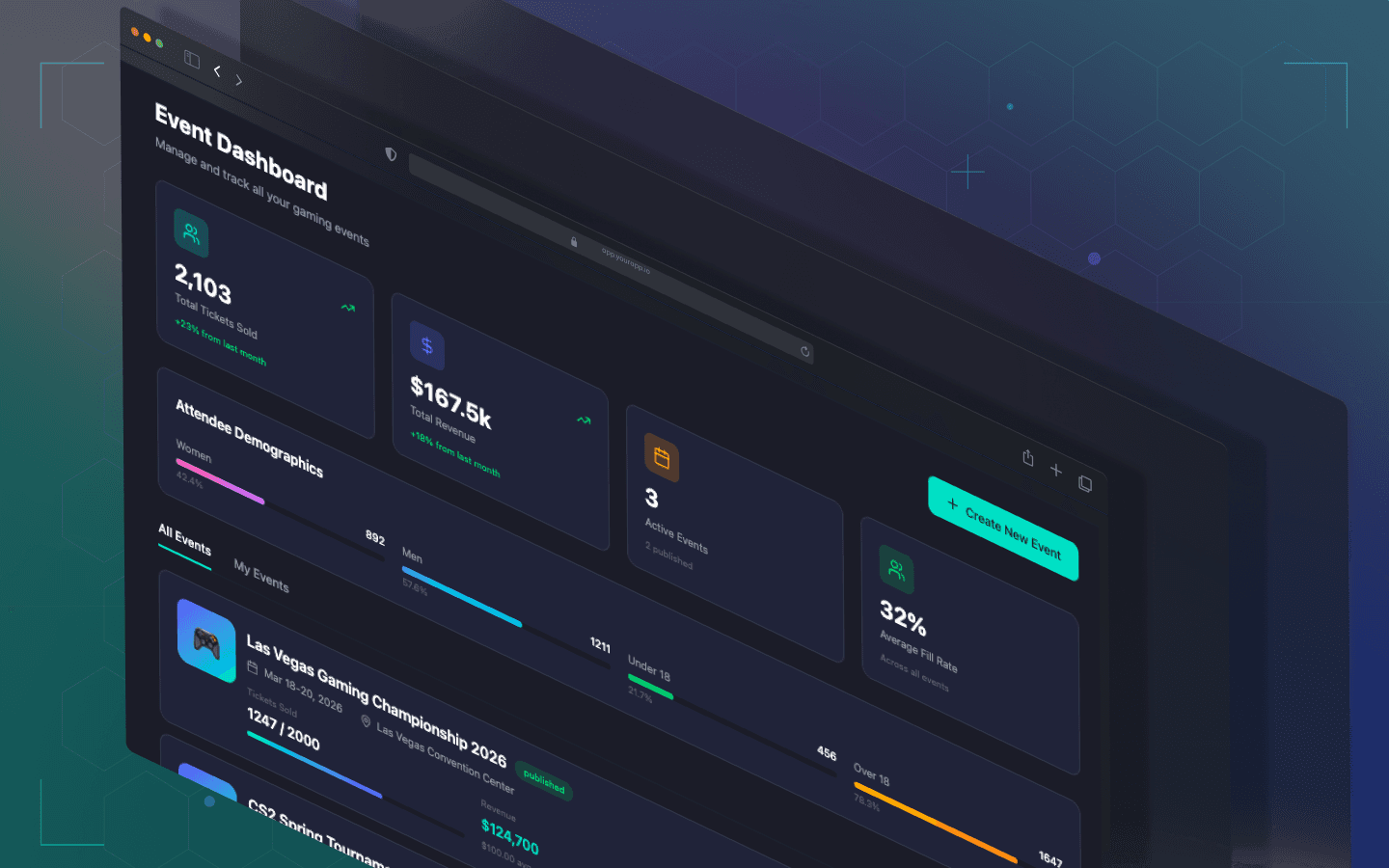
The screens below are my own design exploration and reasoning — how I would have approached the product given the constraints. Built in Figma Make using the core product logic and flows I designed, reimagined with the visual direction I'd have proposed if scope and timeline had allowed it.

The screens below are my own design exploration and reasoning — how I would have approached the product given the constraints. Built in Figma Make using the core product logic and flows I designed, reimagined with the visual direction I'd have proposed if scope and timeline had allowed it.

💡 Web platform → Mobile-first

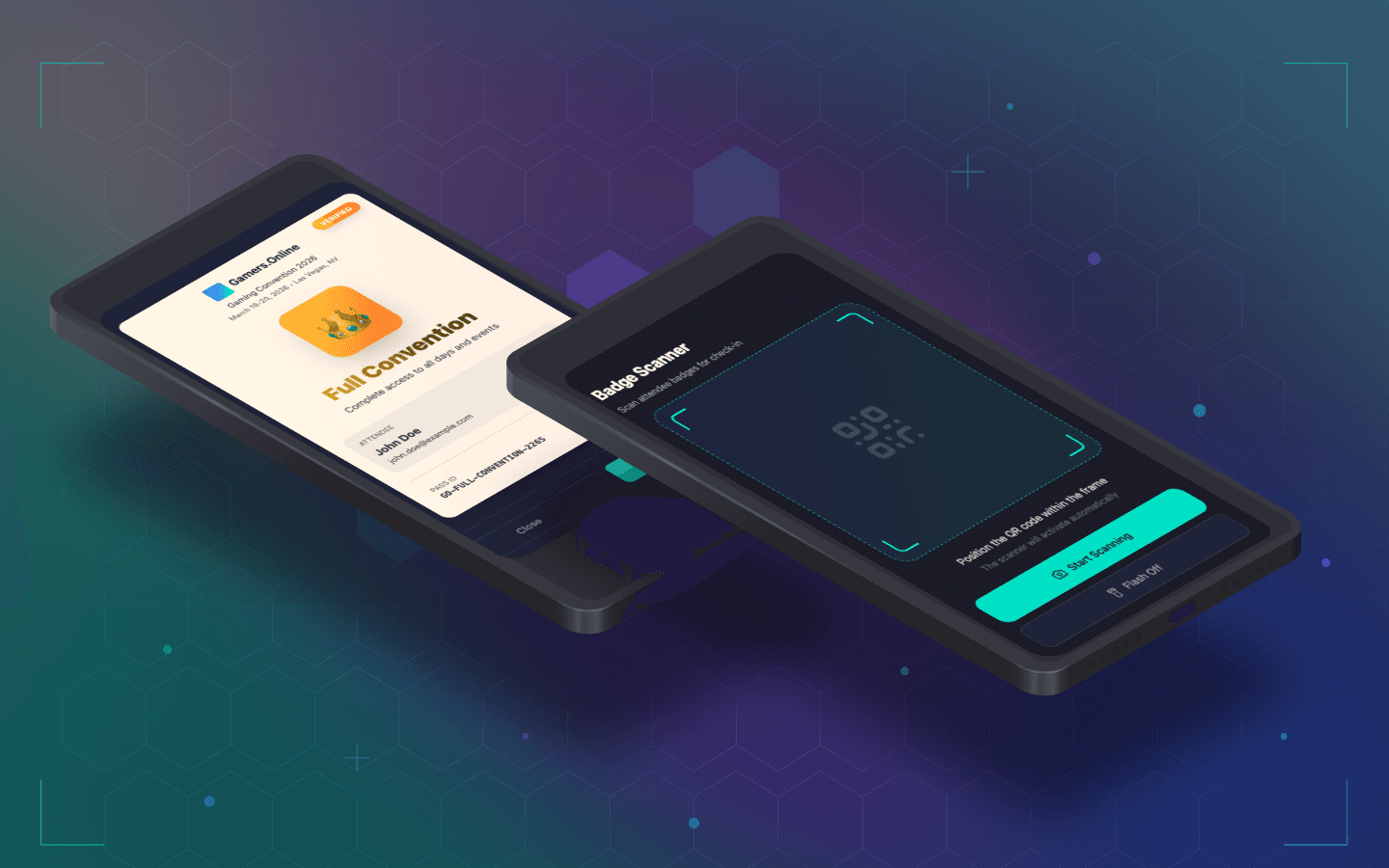
An event manager on the floor of a convention isn't at a laptop. They're scanning badges, handling walk-ins, managing last-minute changes from a tablet or phone. I designed these screens with that context in mind — something the original platform never accounted for.

An event manager on the floor of a convention isn't at a laptop. They're scanning badges, handling walk-ins, managing last-minute changes from a tablet or phone. I designed these screens with that context in mind — something the original platform never accounted for.

💡 A six-section linear flow → A three-step process

💡 A six-section linear flow →
A three-step process

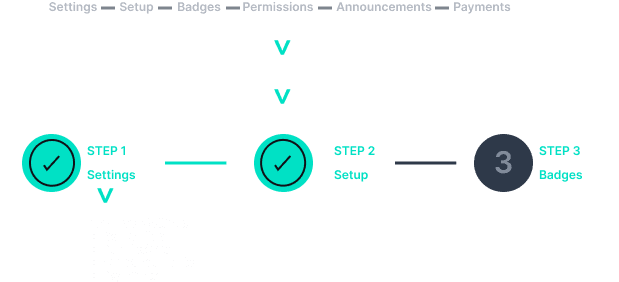
How it was: Six separate sections presented as equal steps — Settings, Setup, Badges, Game Library, Permissions, Payments — with no clear sense of priority or progress.

How I would have done it: Collapsed into three required steps (Settings → Setup → Badges) that reflect how an organiser actually thinks about building an event. Game Library, Permissions, and Payments move into Advanced Settings — present for those who need them, invisible for those who don't. The numbered steps also do psychological work: users can see the end from the beginning.

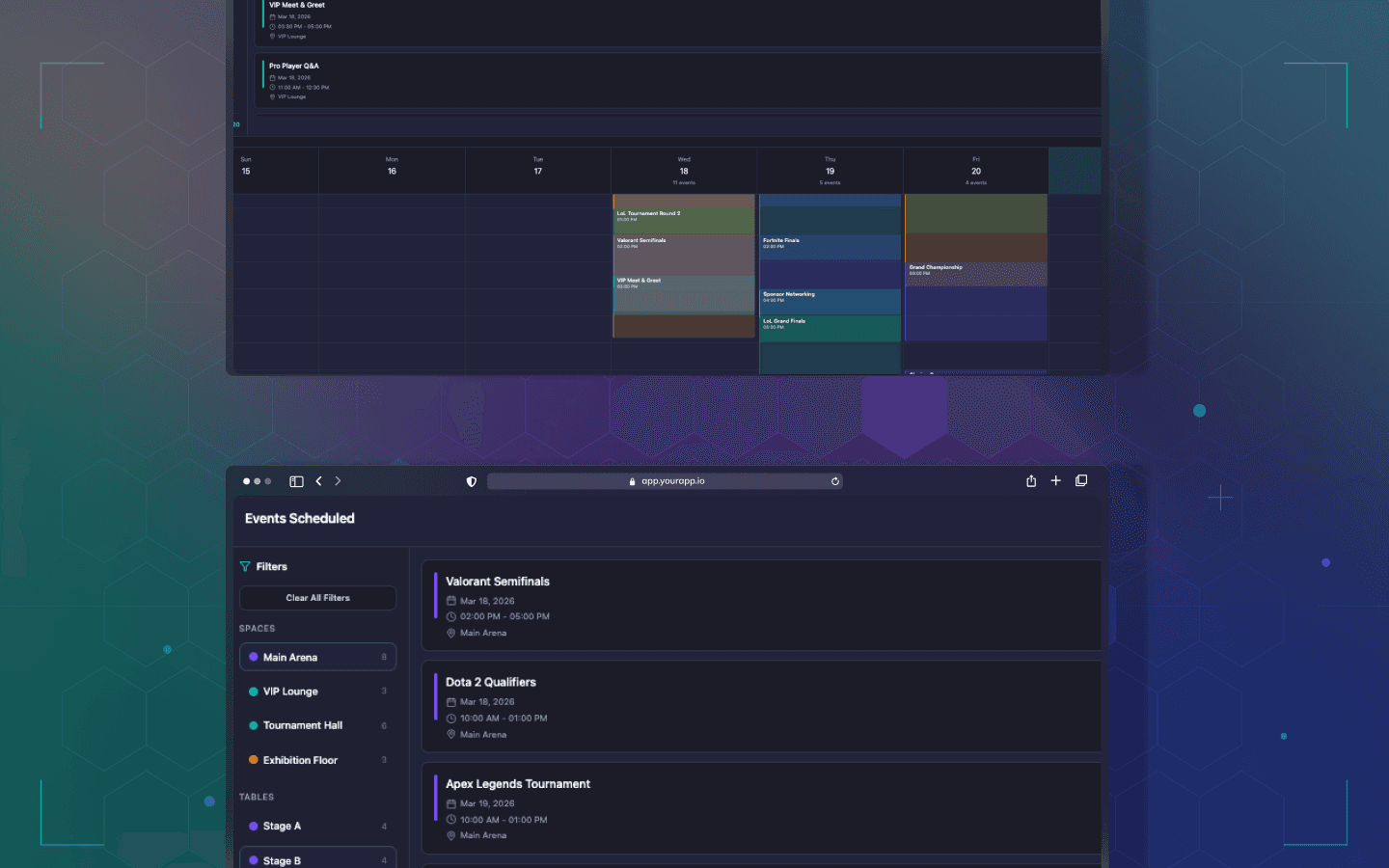
💡 A custom scheduling UI → Google Calendar logic

How it was: A bespoke scheduling interface that required organisers to learn a new system before they could use it.

How I would have done it: A timetable view with hour slots, day/week/month toggle — the same mental model as Google Calendar. Spaces unlock Tables, Tables unlock Sessions, with greyed-out states guiding the order. No instructions needed. The UI teaches itself.

The image featured at the bottom of the about us page

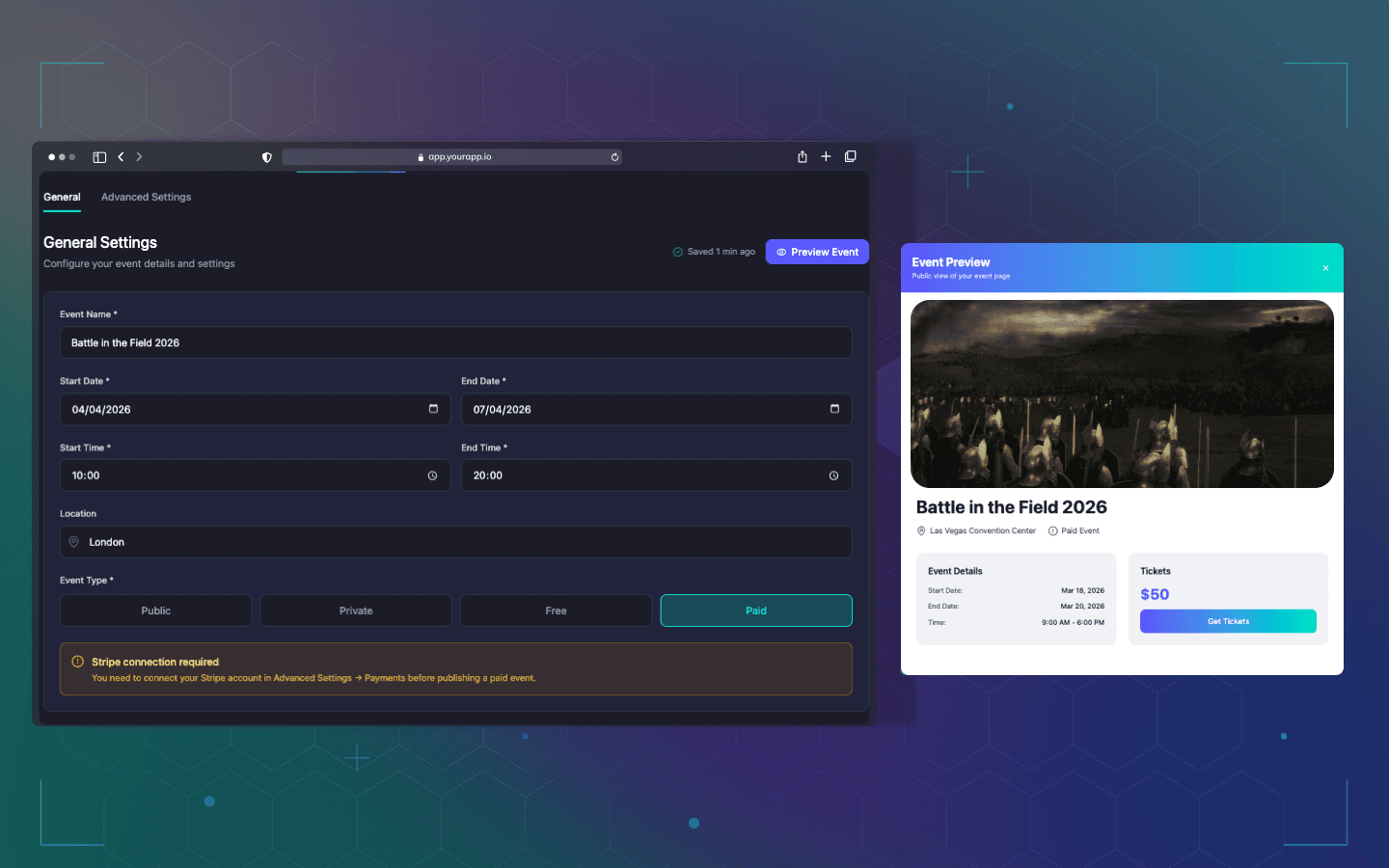
💡 Static form → Live preview with autosave

How it was: Organisers filled in content with no way to see how it would look publicly until after publishing.

How I would have done it: A persistent preview icon always visible in Settings, showing the public event view in real time. Content autosaves every five minutes. For paid events, Publish is gated until Stripe is connected — removing the risk of accidentally publishing an incomplete event.

What this taught me

What

this

taught me

What this

taught me

The most valuable work I did at Gamers.Online wasn't in Figma. It was learning to translate design thinking into something a sales manager, a CEO, and an engineering team could act on — and to take commercial observations and turn them into design decisions. That's the collaboration pattern I want to keep building on.

The MVP proposal also clarified something I now treat as a principle: define what success looks like before building. Not as a formality, but as the thing that keeps every subsequent decision honest.

The platform didn't ship. But the way I work did.

The most valuable work I did at Gamers.Online wasn't in Figma. It was learning to translate design thinking into something a sales manager, a CEO, and an engineering team could act on — and to take commercial observations and turn them into design decisions. That's the collaboration pattern I want to keep building on.

The MVP proposal also clarified something I now treat as a principle: define what success looks like before building. Not as a formality, but as the thing that keeps every subsequent decision honest.

The platform didn't ship. But the way I work did.

Gaming / B2B SaaS / Event Management